

Almost nobody comes to psychological therapy for a spectacular reason. They come because something keeps repeating, wears them down and no longer sorts itself out: work that overflows, the guilt that follows a «no», a mind building scenarios at three in the morning. Those are everyday reasons, and they are enough.
5 everyday reasons that fill the appointment book
These five come up again and again in first sessions. None of them is an emergency, and any one of them is reason enough to start:
- Stress and worry eat up the whole day. It is not one bad week: it is the sustained feeling of always running behind.
- Setting limits is hard and saying «no» comes at a price. You accept things you don’t want and then carry the guilt of having accepted them.
- Your mind lives in the future, in the «what if…». The present fades into the background while you rehearse situations that haven’t happened yet.
- Apathy, low motivation or sudden mood swings show up. What used to appeal stops pulling, and reactions no longer match the real size of things.
- You want to know yourself better and handle your emotions with more perspective. It is the least admitted reason for asking for psychological therapy and one of the most rewarding.
Recognising yourself in just one of them is already a reason to book. You don’t have to add several up or wait for them to grow.
The practice doesn’t wait for a crisis
The idea that psychological therapy is only for people who have hit rock bottom is still around. With that yardstick, most people who are having a rough time conclude that their case «isn’t that bad» and put the first appointment off for months, or years.
The problem with waiting is a practical one: the longer the discomfort has been settled in, the more tangled it gets with routine, sleep, work and relationships, and the harder it is to take apart. Starting early isn’t overreacting, it’s working with more manageable material.
Normalising the practice also changes the equation. When asking for psychological therapy stops reading as an alarm signal, the decision comes sooner, gets talked about naturally and arrives with far less noise around it.
Confidentiality and zero judgement as the starting point
The real fear in a first session isn’t talking: it’s that someone will score what you say. That doesn’t happen here. Psychological therapy starts from a safe, confidential space where nobody decides whether your reason is serious enough, because that isn’t the question.
Being able to say what you don’t say at home or at the office is exactly what makes it possible to start putting it in order. Confidentiality isn’t a courtesy detail: it’s the technical condition for the process to move forward.
The waiting room says more than it seems
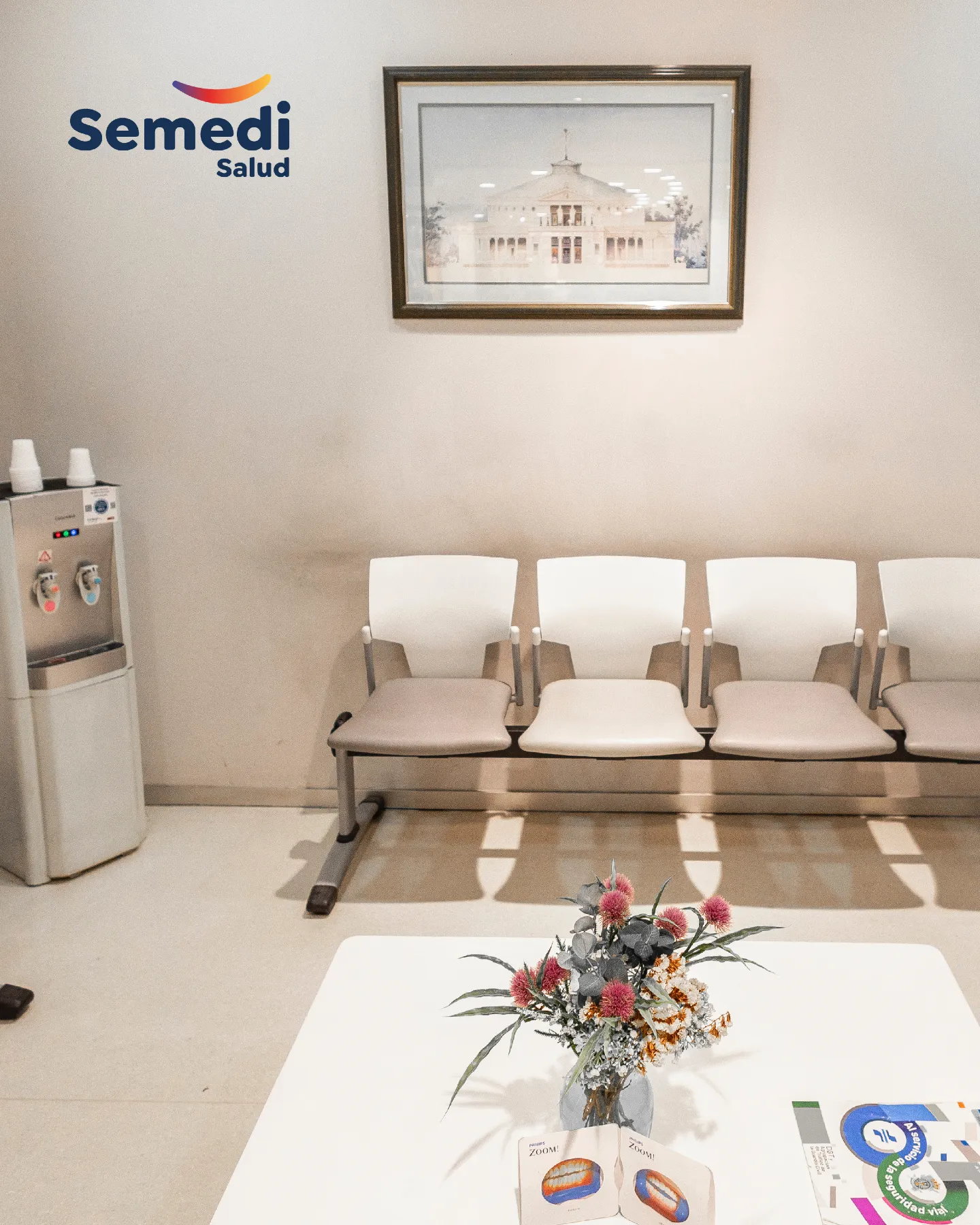
Sitting down to wait for a first session in a rush or on edge helps nobody, and that part of the visit is settled in the waiting room, not in the consulting room. Hence the care taken over every detail of the facilities: a calm, welcoming and functional atmosphere, with room to sit down and none of that feeling of being in a corridor.
The aim is for the whole experience to work, from the moment you come through the door until you finish your appointment with the team of specialists. In psychological therapy that detail counts: arriving without stress means the session has started before it starts.
Semedi Salud, the centre behind the practice
The practice is part of Semedi Salud, a medical centre in Málaga that brings every specialty together under one roof: dentistry, podiatry, medical check-ups and general medicine. When one visit leads to another, coordination happens internally and saves you telling your story from scratch.
The first step fits in a message
To start psychological therapy you don’t need a report, a diagnosis or a neat explanation of what is going on with you. Just write a message telling us in two lines why you are thinking of coming; the approach, the pace and the frequency are discussed in the practice itself, with you there.
You don’t have to be completely sure either. Plenty of people book a first psychological therapy appointment precisely to find out whether they need it, and that doubt is as valid a reason as any of the five above.
Frequently asked questions
How often do sessions take place?
The frequency of psychological therapy sessions is agreed with you and adjusted as the process moves along. There is no single pattern that works for everyone, so we won’t give you one over the phone.
Is psychological therapy also for couples and families?
Yes. Alongside individual work, we see couples and families, where the focus shifts to the dynamic between people and not only to one of them.
What is the difference between a psychologist and a psychiatrist?
A psychiatrist is a doctor and can prescribe medication; a psychologist works on thinking, behaviour and emotions without prescribing it. They are different profiles and, in some cases, complementary.
Can you start at any time of year?
Yes. Psychological therapy has no season: you start when you decide to take the step, not when the calendar or the return to routine suggests it.